Urgent Doesn't Mean Profitable: Rethinking the True Cost of Rush Orders in Cross-Border Trade
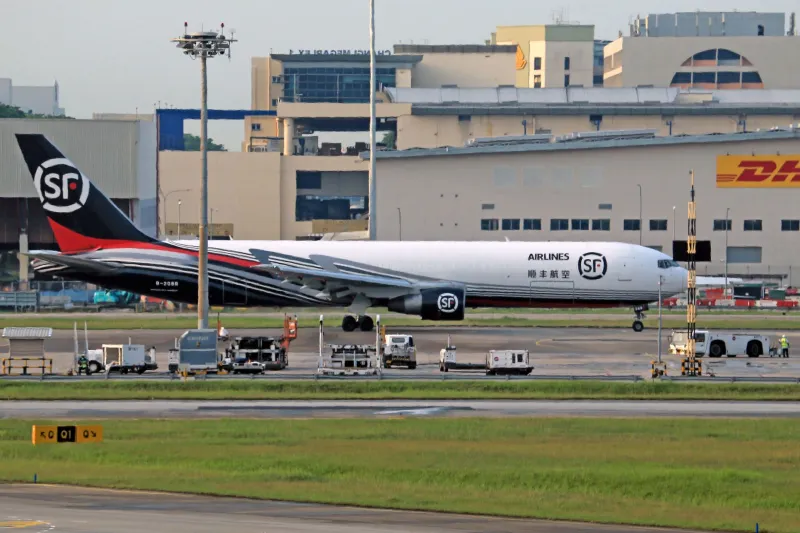
There is a particular kind of pressure that arrives in the form of an urgent buyer request. A longtime client needs a shipment in two weeks instead of eight. A new prospect dangles a sizable order—but only if delivery can be guaranteed before the end of the quarter. In the moment, the instinct is to say yes, move fast, and sort out the details later. The deal feels valuable. The relationship feels worth protecting.
What rarely gets examined in that moment is the actual cost of fulfilling it.
For mid-market US traders operating across international supply chains, rush orders represent one of the most consistently misunderstood cost centers in the business. The revenue is visible. The margin erosion is not. And by the time the true numbers surface—buried in freight invoices, supplier surcharges, and quality remediation expenses—the deal has already closed and the damage is already done.
The Illusion of the High-Value Urgent Deal
Rush orders tend to carry higher invoice values, which makes them feel like premium business. A buyer willing to pay a 10 to 15 percent price premium for accelerated delivery seems like a straightforward win. The math, however, rarely stays that simple once the full cost stack is assembled.
Consider a typical scenario: a US distributor receives an urgent request for industrial components from a domestic buyer who needs product on-site within three weeks. The distributor's standard lead time from its overseas supplier is ten to twelve weeks. Fulfilling the order requires airfreight instead of ocean shipping, a premium supplier run that bypasses the normal production queue, and expedited customs clearance services. Each of those line items carries a cost multiplier that compounds quickly.
Airfreight alone can run five to ten times the cost of ocean freight on a per-kilogram basis, depending on the commodity and the lane. A shipment that would have cost $3,000 to move by sea may cost $18,000 to move by air. If the buyer's price premium only added $5,000 to the top line, the distributor has already lost ground before accounting for anything else.
Where the Costs Actually Accumulate
Logistics is the most visible cost driver in a rush order, but it is rarely the only one. Several additional cost categories tend to go untracked or get absorbed into overhead rather than attributed to the specific transaction.
Supplier premium pricing. Most international manufacturers operate on scheduled production runs. When a buyer requests an off-cycle, small-batch production order on a compressed timeline, suppliers routinely apply surcharges—sometimes explicitly, sometimes embedded in unit pricing. These premiums can range from 8 to 20 percent above standard pricing, depending on the supplier relationship and the complexity of the product. US buyers who have not negotiated explicit rush-order terms in their supplier contracts often absorb these costs without realizing they were applied.
Quality concessions. Compressed production timelines introduce quality risk. Inspection protocols that would ordinarily catch defects during a standard run get shortened or bypassed entirely. Third-party quality inspections, which require scheduling lead time, may be skipped altogether. The result is a higher probability of receiving product that requires rework, generates customer complaints, or triggers a return. Even a modest defect rate on a rush order can eliminate whatever margin premium the urgency appeared to offer.
Internal operational strain. Rush orders consume disproportionate staff time. Account managers, logistics coordinators, and procurement personnel redirect attention from standard pipeline activity to manage a single urgent transaction. This opportunity cost is rarely captured in deal-level profitability analysis, but it is real. When a team spends two days managing the logistics exception on one rush shipment, that time is not being spent developing new supplier relationships, qualifying backup vendors, or processing routine orders efficiently.
Financing and cash flow friction. Expedited transactions often require faster payment to suppliers—sometimes upfront or on shorter terms than standard arrangements. For businesses operating with tight working capital, the cash flow impact of funding an expedited order before the buyer pays can create downstream strain that affects other parts of the operation.
Building a Rush-Order Cost Framework
The most effective way to avoid margin erosion on urgent deals is to evaluate them systematically before committing, rather than reconstructing the damage afterward. A practical framework involves five cost categories that should be quantified on every rush-order request before a price is confirmed.
First, recalculate logistics costs from scratch using the actual expedited mode, not a standard freight estimate. Second, contact the supplier directly to confirm whether a rush production fee or unit price premium will apply. Third, assess whether standard quality inspection can be maintained on the compressed timeline, and if not, factor in a statistical risk allowance for defects. Fourth, estimate internal staff hours required to manage the transaction and apply a cost-per-hour figure, however approximate. Fifth, assess the cash flow impact of accelerated supplier payment terms and assign a financing cost if applicable.
Once these five categories are totaled, compare the result against the buyer's offered price. In many cases, the margin on a rush order will be materially lower than on a standard shipment—sometimes negative when all costs are included. That calculation should drive the decision to accept, reprice, or decline.
When Speed Is Still Worth Buying
None of this suggests that rush orders should be reflexively avoided. There are legitimate strategic reasons to fulfill urgent requests at compressed margins, or even at a short-term loss. Protecting a key account relationship, entering a new market with a demonstrable delivery capability, or preventing a competitor from capturing a buyer's attention can all justify accepting unfavorable economics on a single transaction.
The critical distinction is between accepting a rush order with full knowledge of its true cost and accepting one under the assumption that the revenue premium makes it profitable. The former is a strategic decision. The latter is a margin leak dressed up as a win.
US traders who build systematic cost evaluation into their order intake process—rather than relying on instinct or historical averages—consistently outperform those who treat urgency as inherently valuable. The ability to tell a buyer, with precision, what an accelerated timeline actually costs, and to price accordingly or negotiate terms, is itself a competitive differentiator.
Redefining What a Good Deal Looks Like
In cross-border B2B trade, the most dangerous deals are not the ones that look risky. They are the ones that look easy. A buyer willing to pay a premium for speed, a supplier who says yes without hesitation, a shipment that clears customs without incident—these surface signals can mask a transaction that, when fully costed, delivered a fraction of its apparent value.
The traders who build durable, scalable businesses in international commerce are those who maintain the discipline to look past the invoice and into the full cost architecture of every transaction. Rush orders are not inherently bad business. But they are almost never as profitable as they first appear—and the gap between appearance and reality is exactly where margins go to disappear.