Margins at Risk: Practical Currency Strategies for US Exporters Who Don't Have a Derivatives Desk
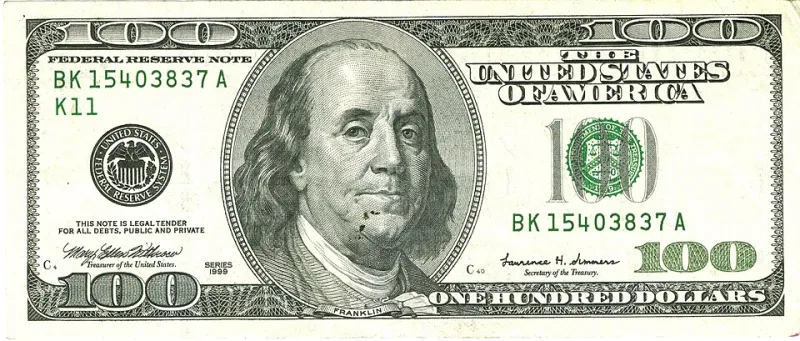
Photo: United States Treasury, Public domain, via Wikimedia Commons
There is a particular frustration that mid-market exporters know well: closing a deal at a healthy margin, only to watch that margin compress—or disappear entirely—by the time payment clears. The culprit is rarely a bad product or a difficult buyer. More often, it is the quiet, relentless movement of exchange rates.
For large multinationals, currency risk is a managed line item. Treasury departments run hedging programs, options desks execute forward contracts, and CFOs sleep reasonably well. For the mid-market exporter shipping industrial components to Germany or consumer goods to South Korea, the calculus is different. The tools exist, but the operational overhead of a full derivatives program is simply not practical. The question, then, is not how to eliminate currency risk entirely—it is how to structure business so that the risk becomes manageable without requiring a financial engineering team.
Understanding Where the Exposure Actually Lives
Before deploying any protective strategy, it is worth identifying precisely where currency exposure enters the transaction. For most exporters, the vulnerability appears in one of three places: the gap between quote and payment, the currency in which contracts are denominated, and the cost base relative to the sale price.
A US manufacturer quoting a buyer in euros, for instance, is essentially making a bet on where EUR/USD will trade between the moment the quote is issued and the moment the wire clears. If the euro weakens 4 percent over a 90-day payment cycle—a movement that is entirely ordinary in active markets—a deal that looked profitable on paper can turn marginal in practice.
The first step is simply mapping this exposure. How long is your average quote-to-payment cycle? Which currencies are your buyers paying in? How much of your cost base is dollar-denominated versus imported? These questions, once answered, reveal the actual shape of the risk rather than a vague anxiety about exchange rates.
Pricing in USD: The Simplest Tool That Most Exporters Underuse
The most direct approach to currency risk is also the most overlooked: price and invoice in US dollars whenever the buyer will accept it. This transfers the currency risk entirely to the counterparty. Many international buyers, particularly in markets where the dollar functions as a de facto reserve currency, are accustomed to dollar-denominated transactions and will not object.
This strategy works better in some sectors and geographies than others. Commodities, industrial inputs, and technology hardware are frequently priced in dollars globally, making dollar invoicing a natural fit. In markets where buyers have strong preferences for local currency—parts of Southeast Asia and Latin America, for example—insisting on dollars may cost you the deal or push buyers toward competitors who will accommodate them.
The practical middle ground is to build currency risk into your pricing when quoting in foreign currency. If you are pricing in euros and your acceptable margin floor is 18 percent, quote to achieve 22 to 24 percent, building in a buffer that accounts for reasonable exchange rate movement over your payment cycle. This is not a hedge in the technical sense, but it is disciplined risk management that costs nothing to implement.
Contract Structures That Reduce Exposure Without Complexity
Beyond pricing, the structure of the contract itself offers meaningful protection. Several mechanisms are worth standard inclusion in international sales agreements.
Currency adjustment clauses allow the seller to revisit pricing if the exchange rate moves beyond a defined threshold between contract signing and delivery. A clause specifying that pricing will be adjusted proportionally if EUR/USD moves more than 3 percent in either direction gives both parties transparency and eliminates the winner-take-all dynamic of a fixed-price foreign currency contract.
Shorter payment terms reduce exposure by shrinking the window during which exchange rates can move against you. Net-30 terms carry meaningfully less currency risk than Net-90. For buyers who require longer terms, consider building the additional exposure into the pricing rather than absorbing it silently.
Partial advance payments serve a dual purpose. They confirm buyer commitment and reduce the total amount subject to currency movement. A 30 percent deposit in dollars, with the balance in local currency upon delivery, cuts your net exposure by nearly a third on the foreign currency portion of the deal.
Payment Mechanisms Worth Knowing
Several payment structures common in international B2B commerce also carry built-in currency protection that exporters sometimes fail to leverage.
Letters of credit, when structured carefully, can specify the currency of payment and eliminate ambiguity about when and how funds transfer. While LCs carry their own administrative overhead, for large transactions they provide both payment assurance and currency clarity that open account terms do not.
Escrow services designed for cross-border trade—increasingly available through fintech platforms rather than only through correspondent banks—allow funds to be held in dollars even when the underlying transaction is quoted in another currency. The buyer deposits the equivalent in their local currency; the escrow converts and holds in USD; the seller receives dollars. The conversion risk exists, but it is concentrated in a single moment rather than spread across an unpredictable payment cycle.
For exporters with recurring relationships in the same market, netting arrangements—where multiple transactions in both directions are aggregated before settlement—can reduce the total volume of currency conversion and therefore the total exposure.
When Simple Hedging Actually Makes Sense
It would be misleading to suggest that financial hedging is always too complex for mid-market exporters. For companies with predictable, recurring export revenue in a specific currency, a straightforward forward contract—locking in an exchange rate for a future date—is neither exotic nor operationally burdensome. Most commercial banks and a growing number of fintech platforms offer forward contracts with minimal minimums and straightforward documentation.
The key is matching the hedge to actual exposure. Hedging speculatively, or hedging more than your expected receivables, introduces its own risk. Used precisely—covering a known receivable in a known currency on a known timeline—a forward contract is a practical tool, not a Wall Street product.
The Strategic Takeaway
Currency volatility is a structural feature of international commerce, not an aberration. The exporters who manage it best are not necessarily those with the most sophisticated financial tools—they are those who have built currency awareness into their pricing logic, contract language, and payment terms from the outset.
For US exporters operating in competitive global markets, the goal is not to eliminate every dollar of currency risk. It is to ensure that exchange rate movement does not quietly undermine deals that were sound on every other dimension. With the right contract structures and pricing discipline, that goal is achievable without a derivatives trading desk.