Cash Before Customs: How Bonded Warehousing Gives US Importers a Working Capital Edge
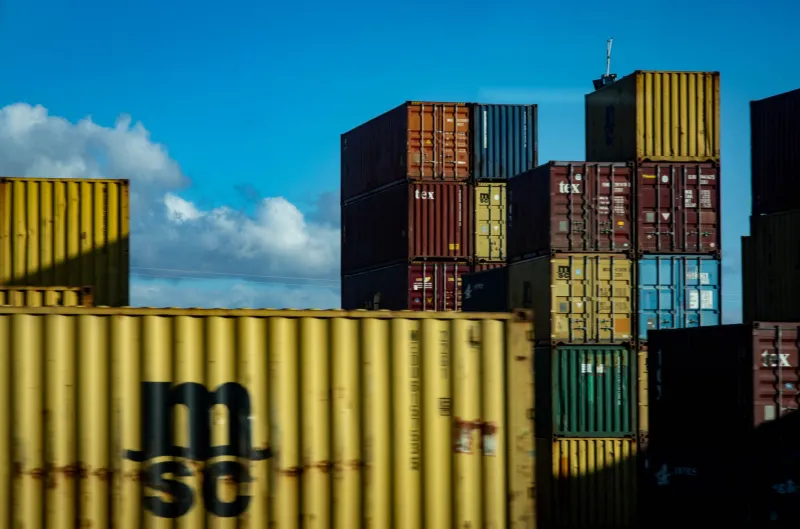
For most mid-market US importers, the duty payment clock starts the moment a shipment clears Customs and Border Protection. That obligation — often calculated as a percentage of the landed value of goods — can represent a significant cash outlay that arrives well before the product has been sold, distributed, or even allocated to a customer order. In a business environment where working capital is perpetually under pressure, that timing mismatch quietly erodes margins and limits operational flexibility.
Bonded warehousing offers a different framework. By storing imported goods in a CBP-authorized facility, US importers can defer duty payments until the merchandise is withdrawn for domestic distribution — or, in certain cases, avoid them entirely. It is a mechanism that has existed within the US customs system for decades, yet remains underutilized by the mid-market importers who arguably stand to benefit most from it.
What a Bonded Warehouse Actually Is
A bonded warehouse is a storage facility that has been licensed and regulated by US Customs and Border Protection. Goods held within these facilities are considered to be in a kind of customs limbo — they have physically entered the United States but have not yet formally entered US commerce. As a result, import duties, tariffs, and certain excise taxes are suspended for as long as the merchandise remains in bond.
The deferral period can extend up to five years from the date of importation under current CBP regulations, providing considerable flexibility for businesses managing seasonal inventory, fluctuating demand cycles, or uncertain pricing environments. Goods can also be manipulated within the facility — cleaned, sorted, relabeled, or repackaged — without triggering the duty obligation, as long as the merchandise itself is not materially altered.
Perhaps most significantly, goods stored in bond can be re-exported to foreign markets without any US duty ever being assessed. For importers who serve both domestic and international buyers, or who are hedging against uncertain domestic demand, this creates a genuine optionality that standard warehouse arrangements simply cannot provide.
Where the Working Capital Math Gets Interesting
Consider a mid-sized US importer bringing in a seasonal product line — consumer electronics accessories, for example — with a total shipment value of $2 million and an applicable duty rate of 15 percent. Under conventional customs clearance, that importer faces a $300,000 duty obligation at the point of entry, regardless of whether a single unit has been sold.
With bonded warehousing, that $300,000 remains in the importer's operating account until goods are withdrawn for domestic sale. If the company pulls inventory in tranches aligned with actual purchase orders, the duty payments become staggered and proportional to revenue already in motion. The cash that would have been tied up in a lump-sum duty payment can instead fund procurement, cover operational expenses, or service existing credit lines at lower cost.
For businesses operating on thin margins or relying heavily on trade credit, the difference between a single large duty payment and a series of smaller, revenue-linked obligations can meaningfully affect liquidity ratios and borrowing capacity. It also reduces exposure during periods of demand uncertainty — if projected sales volumes do not materialize, the importer has not already committed capital to duties on unsold inventory.
Tariff Volatility Adds Another Dimension
The current trade policy environment adds a further layer of strategic relevance. With tariff rates subject to periodic revision — whether through executive action, bilateral negotiations, or the reclassification of product categories — importers who have already paid duties at one rate have no recourse if rates subsequently decline. Goods held in bond, by contrast, are assessed at the rate in effect at the time of withdrawal, not at the time of entry.
This asymmetry creates a modest but real incentive to defer duty payment during periods of elevated tariff uncertainty. An importer who anticipates that a particular commodity rate may be reduced through a trade agreement or administrative review can preserve optionality by keeping goods in bond rather than clearing them immediately. It is not a speculative play so much as a risk management posture — one that costs relatively little to maintain and carries meaningful upside if the rate environment shifts favorably.
Practical Steps for Mid-Market Traders
For importers who have not previously worked with bonded facilities, the entry point is more accessible than many assume. The United States currently operates hundreds of CBP-approved bonded warehouses across major port cities and inland logistics hubs, operated by third-party logistics providers, freight forwarders, and dedicated warehouse operators. Most mid-market importers can access bonded storage through existing logistics relationships without establishing a proprietary facility.
The operational requirements are manageable. CBP mandates accurate recordkeeping for all goods in bond, including detailed tracking of withdrawals and any manipulation activities. Importers should ensure their customs broker is well-versed in bonded warehouse entry procedures — specifically CBP Form 7501 for consumption entries and the documentation requirements for in-bond transfers. A qualified broker will also help navigate the specific class of bonded warehouse that best fits the importer's business model, as CBP designates different facility classes based on the types of goods and activities permitted.
Cost considerations are straightforward. Bonded warehouses typically charge storage fees comparable to conventional third-party logistics arrangements, with a modest premium in some cases for the additional regulatory compliance burden the operator assumes. Importers should model these incremental costs against the working capital benefit of deferring duty payments to confirm that the arrangement is net-positive for their specific margin profile.
Finally, importers operating across multiple product categories should evaluate which lines carry the highest duty exposure and prioritize bonded storage for those shipments. Not every product warrants the additional administrative coordination, but for high-value goods with significant tariff obligations, the working capital impact of deferral can easily outpace the cost of the arrangement.
A Structural Advantage, Not a Workaround
Bonded warehousing is not a loophole or an aggressive tax position. It is a fully sanctioned mechanism within the US customs framework, designed precisely to support importers in managing the timing of their duty obligations. The businesses that deploy it effectively are not cutting corners — they are exercising a strategic option that their competitors may be overlooking simply out of unfamiliarity.
In an environment where working capital efficiency increasingly separates high-performing importers from those struggling to maintain margin, the ability to defer a substantial cash outlay until goods are actually moving into the market represents a genuine structural advantage. For mid-market US importers willing to invest a modest amount of operational attention in understanding the mechanism, bonded warehousing may be one of the most accessible and underappreciated tools available in the current trade landscape.